Knowledge begins with a question. Sharing it is the first step to building a conversation that matters.
NEditorial team NatuVitro Foundation··5 min read
Learning together also means making room for questions.
Research begins long before its results. It starts when someone stops, observes, and asks: what do we want to understand, and why does it matter?
In reproductive medicine, different perspectives coexist: the laboratory’s experience, care for people, and shared learning among professionals. A clear question can become a meeting point between them.
A good question opens a path
Asking a question is a way to organize what we know and recognize what we still need to explore. Sharing it allows other people to bring context, experiences, and perspectives that we may not have considered.
From interest to a shared question
Not all conversations begin with an answer. Sometimes the first step is to find the words that describe a concern and decide what information would help us understand it better.
Listen before assuming
Listening carefully helps distinguish between what we think matters and what people truly want to understand. This space for asking is part of thoughtful communication.
Explain the context with clear words.
Make room for different experiences and points of view.
Distinguish what is known from what remains open.
Connect each idea to the question that gave rise to it.
“
Sharing knowledge also means sharing the questions we still don’t know how to answer.
A question can connect different ways of looking.
From question to conversation
A useful conversation needs time to be formulated, listened to, and reviewed. This journey proposes a simple way to organize the exchange, without turning it into a list of closed answers.
Name the question. Clearly express what we want to understand.
Gather the viewpoints. Identify who it’s useful to listen to and what context they can bring.
Read and discuss. Examine the ideas and their limits before drawing conclusions.
Ask again. Collect the questions that arise and decide the next step.
The spaces of dialogue
Spaces for to talk.
Open a photograph and browse the gallery.
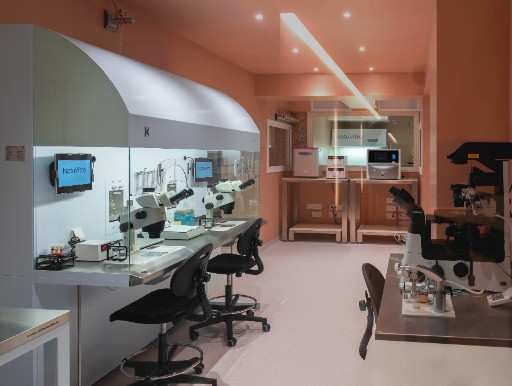
The laboratory of the NatuVitro clinic.A space to listen and understand.
Context is also part of knowledge
An isolated statement can be difficult to interpret. Knowing where it comes from, what question it answers, and what its limits are helps place it in context. These three viewpoints can guide a shared reading.
Three viewpoints for a shared reading
Viewpoint
Question it brings
In the conversation
Research
What are we trying to understand?
Present the approach, the context, and the limits.
Training
How can we learn together?
Compare ideas and explain the concepts.
People
What do we need to understand?
Listen to doubts and facilitate clear language.
Make room for what remains open
Shared knowledge doesn’t end when you close a reading. It continues in the questions we bring to a meeting, in an explanation we review, and in the dialogue between disciplines.
That’s why we want a space where asking questions is as natural as learning. You can get to know our research lines, explore the training, or share an idea.
Science, learning, and people
Knowledge has many viewpoints.
Open a photograph and browse the gallery.
One question, different perspectives.The laboratory of the NatuVitro clinic.Learn through conversation.A space to listen and understand.